Advances in Cutting Tools :Powering the Next Leap in Manufacturing
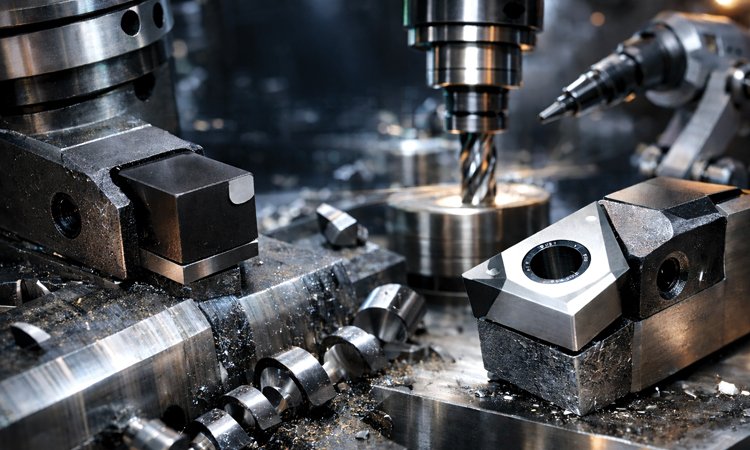
Cutting tools are the silent workhorses of manufacturing. Every machined component—whether in an automobile, aircraft, power plant, or medical device—owes its shape, accuracy, and surface finish to the performance of the cutting tool. As materials become harder, geometries more complex, and production cycles shorter, cutting tools have evolved rapidly to meet these growing demands. Today, advances in cutting tool materials, coatings, geometries, & digital integration are transforming machining productivity, quality, & cost efficiency across industries.
Evolution of Tool Materials
One of the most important advances in cutting tools has been the development of high-performance tool materials. Traditional high-speed steel, while still used in certain applications, has largely given way to cemented carbides, ceramics, cubic boron nitride (CBN), and polycrystalline diamond (PCD). These materials can withstand much higher cutting speeds and temperatures, enabling faster machining and longer tool life. Carbide tools, in particular, have become increasingly sophisticated. Fine-grain and ultra-fine-grain carbides offer higher hardness and toughness, allowing tools to resist wear, chipping, and thermal cracking. In difficult-to-machine materials such as titanium alloys, hardened steels, and superalloys, ceramics and CBN tools deliver exceptional performance, making it possible to machine parts that were once considered nearly impossible.
Revolution in Coating Technologies
Tool coatings have been one of the biggest drivers of performance improvement in recent decades. Modern coatings such as titanium aluminum nitride (TiAlN), aluminum chromium nitride (AlCrN), and multi-layer nano-composite coatings act as thermal barriers and reduce friction at the cutting edge. This allows tools to operate at higher speeds while maintaining dimensional stability and surface quality. Advanced physical vapor deposition (PVD) and chemical vapor deposition (CVD) processes have enabled extremely thin, uniform, and strongly bonded coatings. These coatings improve wear resistance, reduce built-up edge, and protect the cutting edge from oxidation and diffusion wear. As a result, cutting tools now last significantly longer and perform more consistently, even in high-speed and dry machining environments.
Optimized Tool Geometry and Chip Control
Modern cutting tools are no longer simple shapes—they are carefully engineered components designed to control how material is sheared and how chips are formed and evacuated. Advances in computational modeling and simulation have made it possible to design rake angles, clearance angles, and edge preparations that minimize cutting forces and heat generation. Innovative chip breaker designs ensure that chips are broken into manageable pieces and guided away from the cutting zone. This is especially important in high-speed machining, where tangled or continuous chips can damage tools, mar the surface finish, or interrupt production. By improving chip flow and stability, these geometrical innovations directly enhance machining reliability and productivity.
High-Performance Tooling Systems
Another major advance lies not only in the cutting edge but also in how tools are held and supported. High-precision tool holders, shrink-fit systems, hydraulic chucks, and balanced collet chucks provide superior rigidity and concentricity. This reduces vibration, improves surface finish, and allows tools to be run at higher speeds and feeds.
Modular tooling systems further boost productivity by enabling quick tool changes and consistent positioning. In automated and multi-axis machines, these systems ensure repeatability and reduce downtime, which is critical for high-volume and high-mix manufacturing.
Tools for Advanced and Lightweight Materials
The increasing use of lightweight and high-performance materials has driven specialized tool development. In aerospace and electric vehicles, materials such as aluminum alloys, composites, titanium, and hardened steels require tools that can handle high cutting temperatures and abrasive wear. PCD tools are widely used for aluminum and composite machining due to their extreme hardness and low friction, delivering excellent surface finish and long tool life. CBN tools dominate in hard turning and finishing of hardened steels, often replacing grinding operations and significantly reducing cycle times.
Digital and Smart Cutting Tools
One of the most exciting trends in cutting tools is the integration of digital intelligence. Tool holders and inserts equipped with sensors can now monitor temperature, vibration, and cutting forces in real time. This data allows machining systems to detect tool wear, chatter, or impending failure before it causes defects or downtime. When connected to CNC controls and manufacturing execution systems, these smart tools enable adaptive machining—where cutting parameters are automatically adjusted to maintain optimal conditions. This not only maximizes tool life and productivity but also ensures consistent part quality.
Sustainability Through Tool Innovation
Advances in cutting tools also support sustainability goals. Longer tool life means fewer tools consumed and less waste generated. Coatings and optimized geometries reduce cutting forces and energy consumption. Dry and minimum-lubrication machining, made possible by advanced tool designs, further reduce environmental impact and operating costs.
Conclusion
The rapid evolution of cutting tools is reshaping the future of manufacturing. Through breakthroughs in materials, coatings, geometry, digital integration, and sustainability, today’s cutting tools deliver unprecedented performance, reliability, and efficiency. As industries continue to demand higher precision, faster production, and lower costs, advances in cutting tools will remain at the heart of machining innovation—quietly but powerfully enabling the next generation of industrial excellence.