Innovations in Mould Engineering
Redefining Precision, Productivity, and Performance in Modern Manufacturing
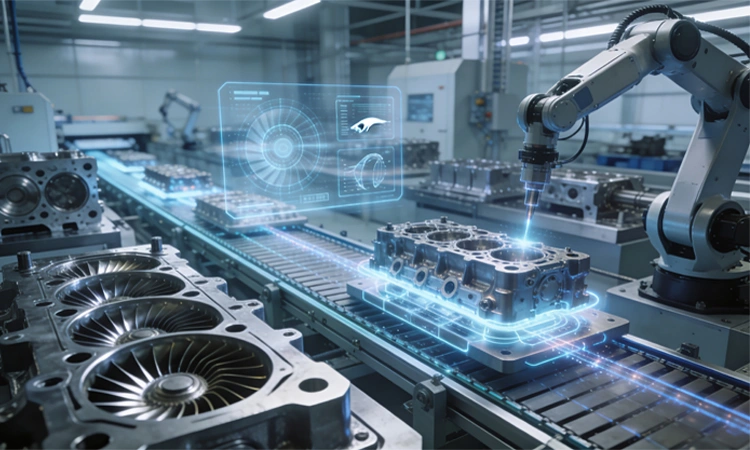
Mould engineering has emerged as one of the most critical pillars of modern manufacturing, enabling the mass production of high-precision components across industries such as automotive, packaging, aerospace, medical devices, electronics, consumer goods, and defense. As product designs become increasingly complex and customer expectations continue to rise, mould engineering is undergoing a remarkable transformation driven by innovation, digitalization, advanced materials, and smart manufacturing technologies.
Today’s moulds are no longer merely production tools; they are sophisticated engineering systems designed to deliver precision, repeatability, faster cycle times, improved surface finishes, and longer operational life. Innovations in mould engineering are helping manufacturers achieve higher productivity while addressing challenges related to quality, sustainability, customization, and cost efficiency.
The Shift Toward High-Precision Moulding
The demand for intricate and highly accurate components has pushed mould manufacturers to adopt advanced engineering practices and ultra-precision machining technologies. Industries such as medical devices, electronics, and automotive increasingly require moulds capable of producing components with micron-level tolerances and complex geometries.
To meet these demands, mould makers are integrating high-speed machining centers, five-axis CNC machines, precision EDM systems, laser texturing technologies, and advanced metrology solutions into their manufacturing processes. These technologies enable the production of highly complex mould cavities with exceptional dimensional accuracy and surface quality.
Precision mould engineering has become especially important in sectors such as electric vehicles and electronics, where miniaturization and lightweighting are driving the need for sophisticated tooling solutions.
CAD/CAM Integration is Revolutionizing Design
One of the most significant innovations in mould engineering is the seamless integration of CAD/CAM technologies. Advanced software platforms now allow engineers to create highly detailed mould designs, simulate mould flow behavior, optimize cooling channels, and predict manufacturing challenges even before production begins.
Modern simulation tools help identify potential issues such as air traps, weld lines, sink marks, warpage, and uneven material flow. This reduces costly trial-and-error processes and significantly shortens development cycles.
Digital twin technology is also gaining traction in mould engineering. By creating virtual replicas of moulds and production environments, manufacturers can monitor performance, analyze wear patterns, and optimize operational efficiency in real time.
The result is faster design validation, reduced lead times, and improved mould reliability.
Conformal Cooling Channels Improve Efficiency
Cooling is one of the most critical aspects of mould performance, directly affecting cycle times, product quality, and production efficiency. Conventional cooling systems often struggle to maintain uniform temperature distribution, particularly in complex mould geometries.
Innovations in additive manufacturing have enabled the development of conformal cooling channels that closely follow the contours of the mould cavity. These channels provide superior heat dissipation and uniform cooling, significantly reducing cycle times and improving part consistency.
Conformal cooling technology has become particularly valuable in high-volume production environments where even small reductions in cycle time translate into substantial productivity gains.
The adoption of metal additive manufacturing for mould inserts is steadily increasing as manufacturers recognize its potential to enhance thermal performance and operational efficiency.
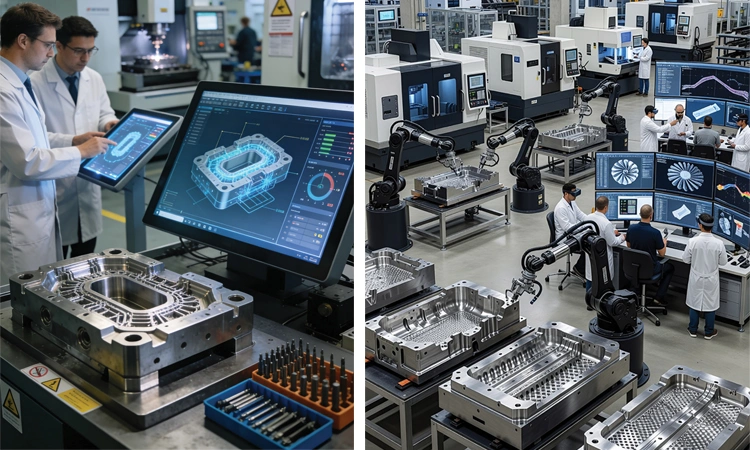 Smart Moulds are Enabling Industry 4.0
The rise of Industry 4.0 is transforming mould engineering through the integration of sensors, IoT technologies, and data analytics. Smart moulds equipped with embedded sensors can monitor parameters such as temperature, pressure, vibration, and cycle performance in real time.
This enables predictive maintenance, minimizes downtime, and improves process control. Manufacturers can detect abnormalities early, optimize injection parameters, and enhance overall equipment effectiveness.
Data-driven moulding environments are helping companies improve productivity while reducing rejection rates and maintenance costs. Smart mould technologies are particularly beneficial in automated and unmanned manufacturing environments where real-time monitoring is essential.
As digitalization accelerates, mould engineering is evolving from a traditional toolmaking discipline into an intelligent manufacturing ecosystem.
Advanced Materials are Enhancing Mould Performance
Material innovation is playing a vital role in improving mould durability, wear resistance, thermal conductivity, and overall performance. Traditional tool steels are now being complemented by advanced materials such as powder metallurgy steels, beryllium copper alloys, ceramic coatings, and high-performance composites.
These materials offer superior hardness, corrosion resistance, and thermal stability, enabling moulds to withstand demanding production conditions and longer operational cycles.
Surface engineering technologies such as PVD coatings, nitriding, hard chrome plating, and laser hardening are also enhancing mould life and reducing maintenance requirements.
In industries processing abrasive or corrosive materials, advanced material technologies have become essential for maintaining consistent production quality and minimizing downtime.
Additive Manufacturing Opens New Possibilities
Additive manufacturing, commonly known as 3D printing, is revolutionizing mould engineering by enabling unprecedented design flexibility and rapid prototyping capabilities.
Mould manufacturers can now produce complex inserts, conformal cooling structures, and prototype moulds much faster than conventional machining methods. This significantly shortens product development cycles and accelerates time-to-market.
Hybrid manufacturing systems combining additive and subtractive processes are further expanding possibilities in mould production. These systems allow intricate geometries to be additively built and subsequently finished through precision machining.
Although additive manufacturing is not yet a complete replacement for conventional mould making, it is becoming an increasingly powerful complementary technology.
Automation is Driving Productivity
Automation has become a key focus area in mould manufacturing as companies strive to improve productivity, consistency, and operational efficiency. Robotic systems are increasingly being used for electrode handling, tool changing, polishing, inspection, and material movement.
Automated machining cells with pallet systems and integrated inspection capabilities are enabling continuous production with minimal human intervention.
In addition, AI-powered process optimization is helping manufacturers analyze machining data, improve cutting strategies, and reduce production bottlenecks.
Automation not only improves efficiency but also addresses the growing shortage of skilled manpower in the tooling industry.
Sustainability is Reshaping Mould Engineering
Sustainability has become a major consideration in mould engineering as industries seek to reduce environmental impact and improve energy efficiency.
Manufacturers are increasingly focusing on energy-efficient mould designs, optimized cooling systems, recyclable materials, and waste reduction strategies. Lightweight mould materials and improved thermal management systems contribute to lower energy consumption during production.
The adoption of dry machining, minimum quantity lubrication, and eco-friendly surface treatments is also helping reduce the environmental footprint of mould manufacturing operations.
Sustainable mould engineering practices are becoming essential not only for regulatory compliance but also for long-term business competitiveness.
Challenges Still Remain
Despite rapid technological progress, the mould engineering sector continues to face several challenges. Rising raw material costs, long lead times, high capital investments, intense global competition, and shortages of skilled toolmakers remain significant concerns.
Additionally, increasing customer expectations for faster delivery and lower costs place immense pressure on mould manufacturers to continuously innovate while maintaining profitability.
Small and medium-sized enterprises often struggle to adopt advanced technologies due to financial constraints. Industry-wide collaboration, government support, and technology-sharing initiatives can play a crucial role in overcoming these barriers.
The Road Ahead
The future of mould engineering will be shaped by intelligent manufacturing, digital integration, advanced materials, and sustainable production practices. As industries demand higher precision, faster production, and greater customization, mould manufacturers must continue to evolve and embrace innovation.
India, with its growing manufacturing ecosystem and expanding automotive, electronics, aerospace, medical, and packaging sectors, holds tremendous potential for becoming a global hub for advanced mould engineering.
Companies that invest in R&D, automation, digital technologies, and workforce development will be best positioned to thrive in the next phase of industrial transformation.
Innovations in mould engineering are not merely improving tooling capabilities-they are redefining the future of manufacturing itself.