Reinventing the Carbide Cutting Tool Industry
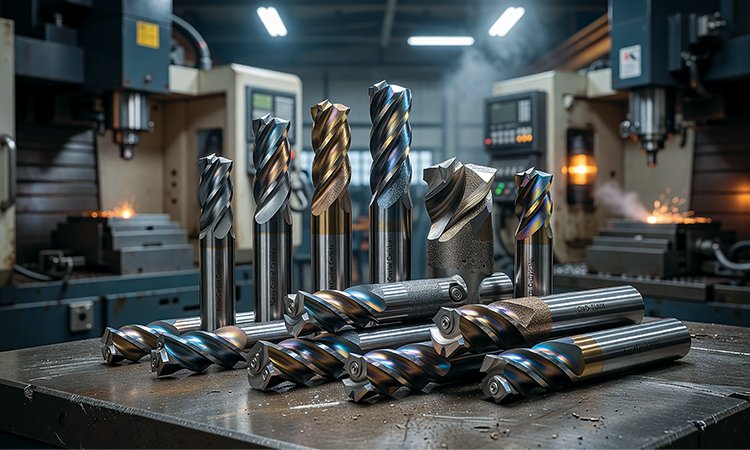
The carbide cutting tool industry forms the backbone of modern manufacturing. From automotive and aerospace to die & mould, railways, medical engineering, and defense production, carbide tools play a decisive role in ensuring productivity, precision, and machining efficiency. Over the years, the industry has evolved from supplying conventional cutting tools to delivering highly engineered solutions capable of machining exotic materials at extraordinary speeds and tolerances.
However, despite technological advancements and growing industrial demand, the carbide cutting tool sector faces multiple challenges that threaten profitability, sustainability, and long-term growth. Rising raw material costs, price wars, counterfeit products, dependence on imports, skilled manpower shortages, rapid technological changes, and sustainability pressures are creating serious concerns for manufacturers and end users alike. Addressing these issues requires a combination of technological innovation, policy support, skill development, and collaborative industrial strategies.
Rising Raw Material Costs Continue to Hurt
One of the biggest concerns for the carbide cutting tool industry is the escalating cost of tungsten carbide and cobalt, the two primary constituents of carbide tools. Global supply chain disruptions, geopolitical uncertainties, and dependence on limited mining regions have made raw material prices highly volatile.
Since carbide tool manufacturing is material-intensive, even small fluctuations significantly impact production costs and margins. Smaller manufacturers, in particular, struggle to absorb these cost increases while competing against large multinational brands.
To address this issue, companies must focus on material optimization, recycling, and reclaiming used carbide tools. Carbide recycling has emerged as a critical strategy for reducing dependence on virgin raw materials while promoting sustainability. Governments and industry bodies can also encourage domestic sourcing initiatives and support investments in alternative materials research.
Counterfeit Products Damage Industry Reputation
The proliferation of counterfeit and low-quality cutting tools in the market remains a major challenge. These tools are often sold at significantly lower prices, attracting cost-conscious buyers. However, they compromise machining quality, reduce productivity, damage expensive components, and sometimes even lead to machine breakdowns. Counterfeit products not only affect genuine manufacturers financially but also erode customer confidence in the industry.
The solution lies in stronger quality certification systems, digital traceability, and awareness programs for end users. Tool manufacturers can adopt QR-code-based authentication systems, serialized tracking, and smart packaging technologies to help customers identify genuine products. Industry associations should work closely with regulatory authorities to curb counterfeit imports and strengthen intellectual property protection.
The Need for Continuous Technological Upgradation
Modern manufacturing environments are changing rapidly. High-speed machining, multitasking machines, five-axis machining centers, and unmanned operations demand cutting tools with superior geometries, advanced coatings, and enhanced wear resistance.
Traditional tooling approaches are no longer sufficient for industries machining titanium, Inconel, composites, hardened steels, and other difficult-to-machine materials. Customers increasingly expect longer tool life, higher cutting speeds, and consistent dimensional accuracy.
To remain competitive, carbide tool manufacturers must invest aggressively in R&D and innovation. Advanced coatings such as PVD and CVD, nano-coatings, optimized chip breakers, and AI-assisted tool design are becoming essential rather than optional. Digital manufacturing technologies, including simulation software and tool performance analytics, can further improve tool development and application engineering capabilities.
Skill Gaps Limit Industry Growth
Despite rapid industrial growth, the shortage of skilled machinists, CNC programmers, tooling engineers, and application specialists remains a persistent concern. Advanced carbide tooling requires deep understanding of machining dynamics, cutting parameters, tool paths, and material behavior. Improper tool usage often results in premature wear, poor surface finish, and productivity losses, leading customers to incorrectly blame the tool itself.
The industry must therefore prioritize workforce development through structured training programs, partnerships with technical institutes, and continuous customer education initiatives. Tool manufacturers can establish technology centers and demonstration facilities where operators and engineers receive hands-on exposure to modern machining practices. A stronger industry-academia collaboration can help create a future-ready talent pool for the manufacturing sector.
Balancing Cost Pressures with Performance Expectations
Customers today seek high-performance tools at increasingly competitive prices. This puts tremendous pressure on manufacturers to balance innovation with affordability. Many end users still focus primarily on the purchase price of the tool rather than evaluating the overall cost per component. However, premium carbide tools often deliver better productivity, reduced downtime, lower rejection rates, and longer life cycles, ultimately reducing total manufacturing costs.
 The industry needs to promote a value-based approach instead of a price-based mindset. Application engineering support, productivity audits, and machining optimization services can help customers understand the long-term benefits of quality tooling solutions. Manufacturers that position themselves as productivity partners rather than mere product suppliers are likely to gain astronger competitive advantage.
Sustainability is Becoming a Key Priority
Environmental concerns and sustainability goals are reshaping manufacturing worldwide, and the carbide cutting tool industry is no exception. Energy-efficient production processes, reduced material wastage, recyclable tooling systems, and eco-friendly coatings are becoming increasingly important. Dry machining and minimum quantity lubrication (MQL) technologies are also gaining momentum as industries attempt to reduce coolant consumption and environmental impact.
Tool manufacturers must adopt greener manufacturing practices while developing tools optimized for sustainable machining. Carbide recycling programs, remanufacturing initiatives, and circular economy models can significantly reduce environmental footprints while improving resource utilization. Sustainability is no longer merely a compliance issue-it is becoming a business imperative.
Opportunities in Emerging Sectors
While challenges exist, the carbide cutting tool industry also stands at the threshold of enormous opportunities. India’s rapid expansion in aerospace manufacturing, defense production, electric vehicles, semiconductor equipment, renewable energy, and precision engineering is generating substantial demand for advanced tooling solutions. The rise of localized manufacturing under initiatives such as “Make in India” is further encouraging investments in machining infrastructure and precision engineering capabilities.
Electric vehicle manufacturing, for instance, requires specialized tooling for lightweight materials, battery components, and precision assemblies. Similarly, aerospace and defense sectors demand ultra-high precision machining with stringent quality standards. Companies that invest early in application-specific tooling technologies will be better positioned to capitalize on these emerging opportunities.
The Importance of Industry Collaboration
The future of the carbide cutting tool industry cannot depend solely on individual companies. A collaborative ecosystem involving manufacturers, machine tool builders, software developers, educational institutions, and government agencies is essential. Joint research initiatives, industry clusters, technology-sharing platforms, and skill development programs can accelerate innovation and strengthen India’s global competitiveness.
Trade exhibitions, technical seminars, and live machining demonstrations also play a critical role in spreading awareness about advanced tooling technologies and best practices. Government support in the form of incentives for R&D, local manufacturing, and export promotion can further strengthen the domestic tooling ecosystem.
Building a Resilient Future
The carbide cutting tool industry is undergoing a significant transformation. Traditional manufacturing models are giving way to digitally connected, highly automated, and precision-driven production environments. Companies that adapt quickly to changing technological and market dynamics will emerge stronger and more competitive.
The path forward lies in innovation, sustainability, skill development, quality assurance, and customer-centric solutions. By embracing advanced technologies, investing in human capital, and fostering industry-wide collaboration, the carbide cutting tool sector can successfully overcome its current challenges.
As manufacturing becomes increasingly sophisticated and globally competitive, carbide cutting tools will continue to remain indispensable enablers of productivity, precision, and industrial growth. The industry’s ability to evolve and innovate will determine not only its own future but also the future of modern manufacturing itself.
– P.K. Balasubramanian