The Role of Vibration Damping in Modern Machining
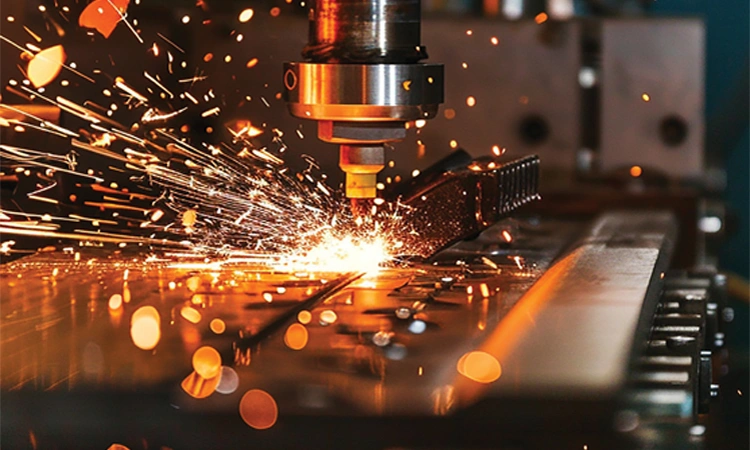
In today’s highly competitive manufacturing environment, machining operations are expected to deliver exceptional accuracy, superior surface finishes, shorter cycle times, and longer tool life-all while processing increasingly complex components made from difficult-to-machine materials. Achieving these objectives requires more than powerful machine tools and advanced cutting tools. One often overlooked yet critical factor is vibration control.
Vibration, commonly referred to as chatter in machining, is one of the biggest obstacles to precision manufacturing. It can compromise dimensional accuracy, degrade surface finish, accelerate tool wear, damage machine components, and reduce productivity. As manufacturers push the limits of cutting speeds and material removal rates, effective vibration damping has become an indispensable element of modern machining. Today, it is no longer viewed merely as a corrective measure but as a key enabler of high-performance manufacturing.
Understanding Machining Vibrations
Every machining operation generates vibrations. These may arise from the interaction between the cutting tool and workpiece, machine structure, spindle, fixtures, or external disturbances. While a certain level of vibration is unavoidable, excessive or uncontrolled vibration can quickly become detrimental.
Machining vibrations are generally classified into three categories:
- Free vibrations, which occur due to sudden disturbances such as tool engagement.
- Forced vibrations, caused by periodic forces from rotating components, spindle imbalance, or interrupted cuts.
- Self-excited vibrations (chatter), the most damaging type, resulting from unstable interaction between the cutting process and the machine-tool-workpiece system.
Among these, chatter poses the greatest challenge because it can intensify rapidly, making machining unstable and often forcing operators to reduce cutting parameters.
The Consequences of Poor Vibration Control
Even slight vibrations can have a significant impact on machining quality and productivity. Excessive vibration may lead to:
- Poor surface finish with visible chatter marks.
- Loss of dimensional accuracy and geometric tolerances.
- Premature wear or breakage of cutting tools.
- Reduced spindle and bearing life.
- Damage to fixtures and workholding systems.
- Increased machine noise.
- Higher scrap rates.
- Reduced cutting speeds and feed rates.
- Longer production cycles.
In industries such as aerospace, medical, mould and die, and precision engineering, where tolerances are measured in microns, vibration-related errors can result in costly rework or component rejection.
Why Modern Machining Faces Greater Challenges
Manufacturing trends have significantly increased the likelihood of vibration problems. Today’s machine shops routinely process:
- Titanium alloys
- Nickel-based superalloys
- Hardened steels
- Stainless steels
- Composite materials
These materials generate higher cutting forces and greater heat than conventional engineering steels.
At the same time, manufacturers increasingly machine components with:
- Deep cavities
- Thin walls
- Long overhangs
- Intricate contours
- Complex five-axis toolpaths
Such geometries often require extended tool reach, reducing system rigidity and increasing susceptibility to vibration.
The drive for higher spindle speeds, greater feed rates, and increased metal removal rates further amplifies the need for effective damping.
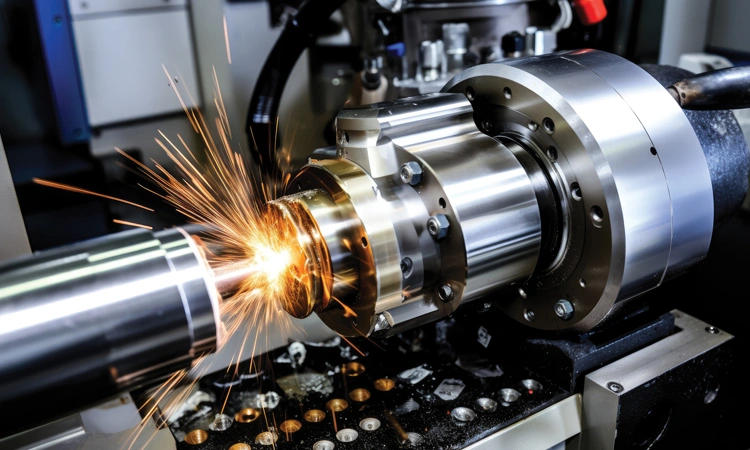 What is Vibration Damping?
Vibration damping refers to the ability of a machining system to absorb and dissipate vibrational energy before it develops into harmful oscillations.
Rather than allowing vibrations to build up, damping mechanisms convert the energy into harmless heat or redistribute it within the system, thereby maintaining machining stability.
Effective damping can be achieved through improvements in:
- Machine tool design
- Cutting tool construction
- Toolholders
- Fixtures
- Workholding systems
- Process optimization
The objective is to maximize rigidity while minimizing vibration transmission.
Damped Toolholders: A Major Breakthrough
One of the most significant developments in recent years has been the introduction of vibration-damped toolholders, particularly for applications involving long tool overhangs.
These toolholders contain internal damping mechanisms, such as tuned mass dampers or specially engineered damping materials that absorb vibrations during machining.
They are especially valuable for:
- Deep cavity milling
- Internal turning
- Boring operations
- Long-reach end milling
- Large mould machining
Compared with conventional toolholders, damped systems enable:
- Higher cutting parameters
- Improved surface finish
- Better dimensional accuracy
- Reduced chatter
- Longer tool life
- Greater process reliability
Many manufacturers report productivity improvements of 20–50% simply by replacing conventional holders with damped versions in critical applications.
Cutting Tool Design and Vibration Control
Modern cutting tools are designed not only for efficient chip removal but also for vibration suppression.
Key design features include:
Variable Helix Geometry
End mills with varying helix angles disrupt harmonic vibrations and reduce chatter.
Variable Pitch Cutters
Unequal spacing between cutting edges prevents resonance from developing during machining.
Optimized Edge Preparation
Carefully honed cutting edges reduce cutting forces while improving edge strength.
Advanced Carbide Grades
Modern carbide substrates combine high hardness with improved toughness, allowing them to withstand fluctuating cutting loads.
High-Performance Coatings
PVD and CVD coatings reduce friction and heat generation, contributing indirectly to vibration reduction.
Machine Tool Rigidity Matters
No damping system can compensate for an inherently unstable machine.
Modern CNC machining centres are designed with:
- Rigid cast iron or polymer concrete structures.
- High-stiffness spindle assemblies.
- Precision linear guideways.
- Hydrostatic slideways.
- Thermal stability systems.
- Direct-drive rotary tables.
Greater structural rigidity shifts the machine’s natural frequencies away from the cutting frequencies, reducing the likelihood of chatter.
Workholding Plays a Crucial Role
Even the most advanced machine and cutting tool cannot deliver optimal results if the workpiece is inadequately clamped.
Modern workholding systems focus on:
- Maximum rigidity.
- Uniform clamping pressure.
- Reduced overhang.
- Minimal deformation.
- Quick and repeatable positioning.
Hydraulic, pneumatic, vacuum, and zero-point clamping systems help improve stability while reducing setup time.
The Contribution of CAM Software
Advanced CAM software has transformed vibration control by generating toolpaths that maintain a more consistent cutter engagement.
Strategies such as:
- Adaptive milling
- Dynamic milling
- Trochoidal machining
- Constant engagement machining
- avoid sudden increases in cutting load that often trigger chatter.
Smooth toolpaths allow cutting forces to remain relatively constant, significantly improving machining stability.
Smart Sensors and Real-Time Monitoring
Industry 4.0 technologies have introduced intelligent monitoring systems capable of detecting vibration before it affects machining quality.
Modern systems employ:
- Accelerometers
- Acoustic emission sensors
- Force sensors
- Spindle load monitoring
- AI-based analytics
These systems continuously analyse machining conditions and can alert operators-or even automatically adjust spindle speed and feed rate-to suppress chatter before it escalates.
Predictive maintenance also benefits from vibration monitoring, allowing worn bearings, spindle imbalance, or structural issues to be identified before they cause machine failure.
Sustainability Through Vibration Reduction
Effective vibration damping also contributes to sustainable manufacturing.
Stable machining reduces:
Tool consumption.
- Machine wear.
- Scrap generation.
- Energy consumption.
- Coolant usage.
- Rework.
Longer tool life and improved process efficiency lower manufacturing costs while supporting environmental objectives.
Future Trends
The future of vibration damping lies in intelligent, adaptive systems.
Researchers are developing active damping technologies, where sensors continuously detect vibration and actuators generate counteracting forces in real time.
Artificial intelligence is expected to optimize machining parameters automatically by learning the vibration characteristics of different tools, materials, and machine configurations.
Digital twins of machining systems may soon simulate vibration behaviour before production begins, enabling engineers to eliminate instability during process planning itself.
Conclusion
As machining continues to evolve towards higher speeds, greater precision, and increased automation, vibration damping has become a fundamental requirement rather than an optional enhancement. Whether through advanced machine tool structures, damped toolholders, innovative cutting tool geometries, optimized workholding, or intelligent monitoring systems, controlling vibration is essential for achieving stable, efficient, and cost-effective machining.
Manufacturers who invest in effective vibration damping technologies gain measurable benefits in terms of productivity, surface quality, dimensional accuracy, tool life, and machine reliability. In an era where every micron counts and every minute of machine time matters, mastering vibration control is no longer simply about eliminating chatter-it is about unlocking the full potential of modern machining.