Application-Specific Coatings for Improved Tool Life: Engineering Surfaces for Performance & Productivity
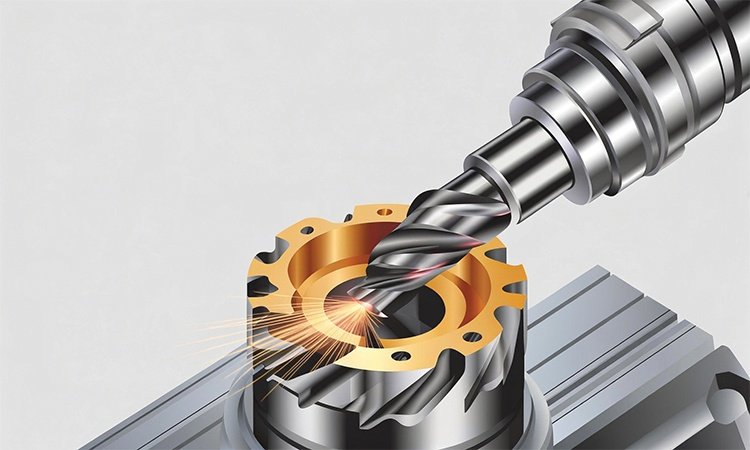
In modern manufacturing, where high-speed machining, hard-to-cut materials, and stringent accuracy demands are the norm, cutting tools are expected to deliver exceptional performance under severe conditions. Tool wear, heat generation, and friction remain persistent challenges that limit productivity and precision. One of the most transformative responses to these challenges has been the development of application-specific tool coatings — thin, engineered surface layers that significantly improve tool life, performance, and process reliability.
Far beyond mere protective films, these coatings are functional surface technologies, precisely tailored to the demands of specific materials and machining operations. From titanium nitride (TiN) to advanced nanocomposites like AlTiN and TiAlSiN, coating science has evolved into a cornerstone of modern tool engineering.
The Science Behind Coatings
A cutting tool in operation faces extreme conditions — high temperatures (often exceeding 1000°C), mechanical loads, and chemical interactions with the workpiece and environment. Coatings serve as a barrier and enhancer, providing resistance to wear, oxidation, and diffusion, while improving lubricity and thermal stability.
The core objectives of tool coatings include:
• Reducing friction and adhesion between tool and workpiece.
• Minimizing thermal damage by reflecting or dissipating heat.
• Enhancing hardness and toughness for improved wear resistance.
• Preventing chemical diffusion between tool and work material.
• Allowing higher cutting speeds and feeds, leading to higher productivity.
By optimizing these factors, coatings extend tool life dramatically — sometimes by up to three to five times — and ensure consistent part quality across long production runs.
Types of Coatings & Their Properties
Tool coatings are primarily classified based on their composition and deposition method. The most widely used processes are Physical Vapour Deposition (PVD) and Chemical Vapour Deposition (CVD).
1. Titanium Nitride (TiN): The Classic Performer
TiN is among the earliest and most popular coatings used on cutting tools. It provides a hard, wear-resistant layer with a characteristic golden finish. It reduces friction, increases surface hardness (up to 2300 HV), and is suitable for general-purpose machining — especially for low to medium cutting speeds and softer materials like aluminum and mild steels.
Applications: Drills, taps, milling cutters, and forming tools for general machining.
2. Titanium Carbonitride (TiCN): Enhanced Toughness and Lubricity
TiCN offers higher hardness and lower friction compared to TiN. The addition of carbon enhances lubricity, making it suitable for applications involving adhesive-prone materials.
Applications: Machining stainless steels, cast irons, and low-carbon steels; forming and punching tools.
3. Titanium Aluminum Nitride (TiAlN) / Aluminum Titanium Nitride (AlTiN): Heat-Resistant All-Rounders
These are among the most widely used coatings in high-speed machining. AlTiN and TiAlN form a stable aluminum oxide layer at elevated temperatures, providing excellent oxidation and thermal resistance. This makes them ideal for dry and high-speed cutting applications where coolant use is limited.
Applications: Aerospace alloys, hardened steels, die & mold applications, and dry milling of tool steels.
4. Chromium Nitride (CrN): Superior Corrosion Resistance
CrN coatings offer excellent resistance to oxidation and corrosion, coupled with good toughness. Though not as hard as TiAlN, they perform exceptionally well in applications involving lubricants or moisture.
Applications: Molds for plastic injection, forming tools, and high-lubricity machining operations.
5. Diamond-Like Carbon (DLC): Ultra-Low Friction Coating
DLC coatings mimic the hardness and smoothness of diamond while maintaining flexibility. They significantly reduce adhesive wear and provide exceptional surface finish quality. However, they are limited to non-ferrous materials, as high temperatures can cause degradation on ferrous metals.
Applications: Aluminum, copper, graphite, composites, and plastics machining.
6. Cubic Boron Nitride (CBN) and Diamond Coatings: For Extreme Conditions
CBN and diamond coatings are at the top end of performance, with unparalleled hardness and wear resistance. They are primarily used for abrasive and hard-to-cut materials like ceramics, glass, composites, and hardened steels.
Applications: Precision grinding, aerospace components, glass fiber reinforced plastics (GFRP), and silicon alloys.
7. Multilayer and Nanocomposite Coatings: The New Frontier
Modern coatings are often multilayered, combining the strengths of several materials. For instance, TiAlN/TiN multilayers offer both toughness and thermal resistance. Nanocomposite coatings like TiAlSiN consist of nanocrystalline grains in an amorphous matrix, delivering extreme hardness (up to 40 GPa) and superior thermal stability.
Applications: Heavy-duty machining, dry cutting, die and mold making, and high-speed milling.
Application-Specific Coating Solutions
Today, coating selection is no longer generic — it is engineered to match the material, process, and environment. The right coating can turn an ordinary tool into a high-performance asset.
- For Steel & Stainless Steel Machining
Coatings like TiCN, AlTiN, and TiAlN provide excellent oxidation resistance and wear protection. These coatings allow cutting at high speeds and prevent built-up edge formation in stainless steel machining. - For Aluminum & Non-Ferrous Alloys
Materials like aluminum tend to adhere to tool surfaces. DLC, TiB₂, and CrN coatings prevent galling and maintain sharp cutting edges. TiB₂, in particular, offers excellent anti-sticking properties and is ideal for aerospace-grade aluminum. - For Cast Iron and Hardened Steels
TiAlN and AlTiN coatings excel here, as they maintain hardness even at elevated temperatures. These coatings are suitable for dry machining, reducing the need for coolant. - For Titanium & Nickel-Based Alloys
Machining superalloys used in aerospace is extremely demanding. Coatings like AlCrN and AlTiSiN withstand high cutting temperatures and resist oxidation and diffusion wear, ensuring stable performance. - For Tool and Die Applications
Multilayer TiAlN/TiN or TiAlSiN coatings enhance wear resistance and toughness, extending tool life during hard milling or finishing of die steels up to 60 HRC.
Benefits of Application-Specific Coatings
The advantages of tailoring coatings to specific machining conditions are manifold:
- Extended Tool Life:
Up to 5x longer than uncoated tools due to reduced wear. - Higher Productivity:
Enables higher cutting speeds and feeds without compromising surface finish. - Improved Surface Quality:
Lower friction ensures smoother finishes and dimensional accuracy. - Reduced Downtime:
Fewer tool changes enhance operational efficiency. - Dry Machining Capability:
Heat-resistant coatings support eco-friendly, coolant-free operations. - Process Stability:
Consistent cutting forces and reduced temperature fluctuations improve reliability.
Recent Innovations in Coating Technology
The evolution of coating technology has kept pace with the growing sophistication of machining operations.
- Nanostructured Coatings:
By controlling crystal size at the nanoscale, coatings achieve superior hardness and toughness simultaneously. - Adaptive Coatings:
Research is underway on coatings that can dynamically respond to temperature changes by forming protective oxide films in-situ. - HiPIMS (High Power Impulse Magnetron Sputtering):
A recent PVD method that produces dense, defect-free coatings with enhanced adhesion. - Functional Gradient Coatings:
Gradual changes in composition from substrate to surface improve bonding and stress resistance. - AI-Optimized Coating Design: Predictive modeling using AI helps match coating chemistry and microstructure to specific cutting environments.
Challenges in Coating Selection
Despite the advancements, coating selection remains a complex task influenced by multiple factors — material type, tool geometry, coolant use, cutting speed, and work environment. A coating that excels in dry machining may underperform in wet conditions, or vice versa. Hence, collaboration between tool manufacturers, coating specialists, and end-users is crucial to optimize coating performance.
Conclusion
Application-specific coatings represent one of the most impactful advancements in cutting tool technology. They have transformed tools from passive wear components into intelligent, engineered surfaces designed to withstand extreme conditions and deliver consistent precision.
As industries move toward high-speed, automated, and sustainable manufacturing, the importance of coating technology will only grow. The future lies in smart, adaptive, and environmentally benign coatings that not only extend tool life but also optimize performance across diverse materials and applications.
In essence, the right coating — designed for the right job — is no longer just an advantage. It’s a necessity for staying competitive in the world of advanced machining