Innovations in Automatic Tool Changers
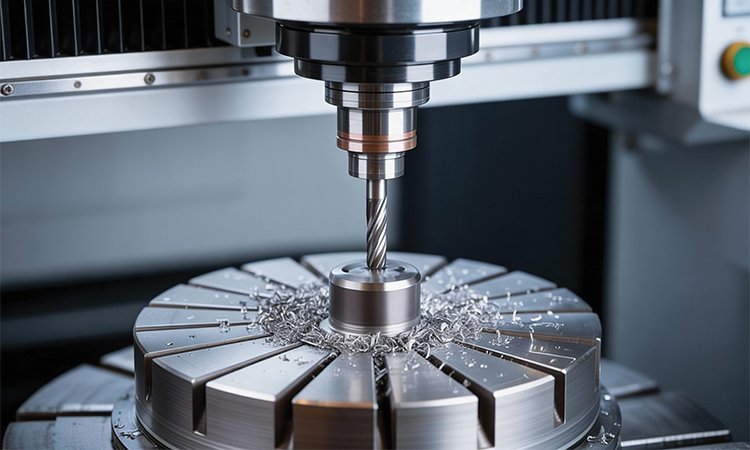
In the fast-paced world of modern manufacturing, where precision, productivity, and flexibility define competitiveness, automation has become the central pillar of advancement. Among the many technologies that have transformed machine tool performance, the Automatic Tool Changer (ATC) stands out as a key enabler of unmanned and efficient machining operations. Once a convenience, the ATC is now a necessity — an intelligent system that enhances the agility, speed, and reliability of CNC machining centers. Over the years, innovations in ATC design, control, and integration have redefined how tools are managed, exchanged, and optimized in production environments across industries.
The Role of Automatic Tool Changers in Modern Machining
An automatic tool changer is a mechanical system designed to automatically replace cutting tools in a CNC machine without manual intervention. It allows the machine to perform multiple operations — drilling, milling, tapping, boring, and reaming — in one continuous cycle. This not only saves time but also improves precision by eliminating human error in tool handling.
In a conventional setup, changing tools manually between operations would cause significant downtime, reducing the efficiency of production. ATCs overcome this by enabling rapid tool changes — often in a matter of seconds — ensuring continuous machining and higher spindle utilization. In modern high-speed machining centers, the ATC is not merely a support component but an integral part of the machine’s productivity strategy.
Evolution of Automatic Tool Changers
The concept of automatic tool changing emerged in the 1950s alongside the development of numerical control (NC) machines. Early systems were simple mechanical devices capable of handling a limited number of tools. However, as CNC technology evolved, machining became more complex, and the need for multi-operation flexibility grew, driving the development of more advanced and intelligent ATC systems.
Today’s ATCs are capable of handling dozens or even hundreds of tools, with sophisticated control systems coordinating their movement and positioning. Depending on machine configuration, they can be categorized as drum-type, chain-type, or carousel-type changers. Each design offers a different balance of speed, capacity, and footprint — making them suitable for various applications ranging from compact machining centers to large double-column machines and horizontal machining centers (HMCs).
The latest generation of ATCs integrates servo-driven systems, robotic arms, and smart sensors for real-time feedback, allowing faster, smoother, and safer tool changes. These innovations have made tool changers more reliable and adaptable to the demands of Industry 4.0 manufacturing environments.
Key Innovations Driving ATC Technology
- High-Speed and Servo-Driven Mechanisms
One of the most notable innovations in recent years has been the development of high-speed servo-driven tool changers. Traditional pneumatic or hydraulic systems, though effective, had limitations in precision and responsiveness. Servo-driven systems offer precise motion control, smoother acceleration and deceleration, and shorter tool change times. Advanced CNC machines now feature tool-to-tool change times as low as 1 to 2 seconds, significantly reducing non-cutting time. The use of direct-drive servos also eliminates the need for mechanical linkages, reducing wear and maintenance while improving reliability.
- Lightweight and Compact Designs
To meet the increasing demand for space optimization and faster motion, ATCs are being designed with lightweight materials and compact architectures. Aluminum alloys, composite components, and optimized structural geometries reduce inertia and energy consumption during tool changes. Innovative carousel and chain configurations allow greater tool density within the same footprint. This is especially beneficial for multi-tasking machines and compact vertical machining centers where space is a premium but flexibility cannot be compromised.
- Intelligent Tool Management Systems
The digital revolution has brought about a new level of intelligence in ATC operation. Modern systems are equipped with integrated tool management software that tracks tool identity, wear, usage history, and life expectancy. Using RFID tags, barcodes, or embedded chips, each tool is digitally linked to the ATC and the CNC controller. The system automatically recognizes the tool, verifies its condition, and selects it according to the machining program. This eliminates manual input errors and ensures that the right tool is used at the right time. When integrated with a Manufacturing Execution System (MES) or Tool Management System (TMS), these smart ATCs enable predictive maintenance, automated tool replenishment, and data-driven decision-making — essential for smart factories.
- Robotic and Collaborative ATCs
The integration of robotics into tool changing systems has opened new horizons in flexibility and precision. Robotic ATCs can handle a wider variety of tool shapes and sizes, perform complex changeovers, and even manage tool assemblies for multi-axis machines.
In some advanced setups, collaborative robots (cobots) are used to support the ATC, assisting in tool loading and unloading during machine idle time or maintenance. This hybrid approach reduces human intervention, enhances safety, and increases uptime.
For large machining centers, particularly in aerospace and energy sectors, robotic ATCs can handle heavy and oversized tools with remarkable accuracy — something that was previously difficult with traditional changers.
- Modular and Scalable Configurations
As manufacturers strive for greater flexibility, modular ATC systems have become a major trend. These systems are designed for scalability, allowing users to expand tool capacity or reconfigure layouts as production demands change.
For instance, a 30-tool changer can be upgraded to 60 or 120 tools by simply adding additional magazine modules without altering the base machine structure. This modularity ensures long-term adaptability, supporting product diversification and new machining applications.
- Predictive Maintenance and Diagnostics
Reliability is vital in automated production lines. Modern ATCs are equipped with sensors and diagnostic software that continuously monitor parameters such as motor load, vibration, and cycle count. The system can detect anomalies — such as wear, misalignment, or abnormal torque — and alert operators before a failure occurs.
This predictive maintenance capability reduces unplanned downtime and enhances the lifespan of the ATC. Integration with CNC diagnostics allows real-time visibility of tool changer health, facilitating proactive service scheduling and minimizing production disruptions.
- Integration with Industry 4.0 and Digital Twins
In the age of smart manufacturing, ATCs are becoming key components of the digital ecosystem. Through the Internet of Things (IoT), ATCs communicate with other systems in the production chain, sharing real-time data on tool usage, performance, and inventory.
The use of digital twin technology enables manufacturers to simulate ATC operations in a virtual environment. Engineers can analyze tool change sequences, predict wear, and optimize movements before actual deployment. This ensures smooth operation, prevents collisions, and enhances process efficiency.
Benefits of Modern ATC Innovations
The innovations in automatic tool changers are not just technological achievements—they translate into tangible benefits on the shop floor.
- Reduced Non-Cutting Time: Faster tool changes directly translate into higher spindle uptime and better machine utilization.
- Increased Productivity: Automated tool management allows continuous and unmanned operation, ideal for high-volume or lights-out manufacturing.
- Enhanced Accuracy: Automated and servo-controlled movements ensure consistent tool positioning and repeatability, reducing dimensional errors.
- Improved Safety: Automation minimizes human intervention in tool handling, reducing the risk of injury and mishandling.
- Flexibility and Customization: Modular and intelligent systems adapt easily to different machining setups and production requirements.
- Lower Maintenance Costs: Predictive monitoring and diagnostics reduce unplanned breakdowns, optimizing lifecycle costs.
Applications Across Industries
Automatic tool changers have become standard equipment in almost all CNC machining centers — from small vertical mills to massive gantry and double-column machines.
- In automotive manufacturing, ATCs enable multi-tool operations for machining engine blocks, cylinder heads, and gear components with minimal downtime.
- In aerospace and defense, where precision and repeatability are critical, ATCs support complex machining sequences involving multiple tool types.
- In die and mould industries, fast tool changes ensure smoother transitions between roughing and finishing operations.
- In heavy engineering and energy sectors, robust ATCs are used in large machining centers to handle heavy, specialized tools safely and efficiently.
The Future of ATCs
Looking ahead, the evolution of ATCs is moving toward greater intelligence, connectivity, and autonomy. The fusion of AI, machine vision, and real-time analytics will make tool changers smarter and more adaptive.
We can expect ATCs that self-optimize tool sequences, learn from previous operations, and adjust their movements for maximum efficiency. Integration with automated tool storage and retrieval systems will further streamline tool logistics within smart factories.
With additive manufacturing and hybrid machining gaining ground, future ATCs will also handle non-traditional tools — including laser heads, grinding attachments, and inspection probes — transforming the CNC machine into a true multi-process system.
Conclusion
The automatic tool changer, once a simple mechanical convenience, has evolved into a sophisticated mechatronic marvel — an indispensable link between productivity and precision. Its innovations mirror the larger trends of manufacturing: automation, digitalization, and intelligence.
By enabling faster tool changes, smarter management, and predictive reliability, modern ATCs are helping manufacturers achieve unprecedented levels of efficiency and flexibility. As machining continues to advance, the ATC will remain at the heart of innovation — seamlessly connecting machines, tools, and data in the pursuit of smarter, faster, and more sustainable manufacturing.