Carbide Cutting Tools & Their Myriad Applications
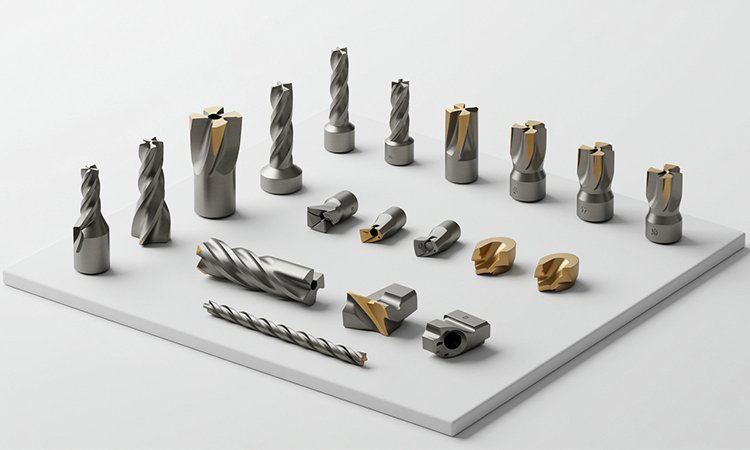
In the ever-evolving world of metal cutting, the quest for productivity, precision, and durability has led to the emergence of advanced tooling materials and designs. Among them, carbide cutting tools have carved an indispensable place across industries. Known for their exceptional hardness, wear resistance, and ability to perform under extreme conditions, carbide tools have revolutionized the way metals are machined, milled, drilled, and turned. From automotive and aerospace components to die and mould manufacturing, these tools have become synonymous with efficiency and performance.
Understanding Carbide Cutting Tools
Carbide cutting tools are primarily made from tungsten carbide (WC), a compound of tungsten and carbon, often bonded with cobalt (Co) as a binder. The material’s hardness ranks next only to diamond and cubic boron nitride (CBN), making it ideal for cutting tough materials at high speeds. Carbide tools can retain their cutting edge at elevated temperatures where conventional high-speed steel (HSS) tools would soften and fail.
The exceptional properties of carbide come from its microstructure — fine, hard tungsten carbide grains cemented together by a metallic binder. By adjusting the grain size and binder composition, manufacturers can tailor the tool’s hardness, toughness, and wear resistance to suit specific machining operations.
Carbide tools are available in a wide variety of forms: solid carbide tools such as drills, end mills, and reamers; and indexable carbide inserts that are clamped onto tool holders for turning, milling, or boring operations. The versatility of carbide and the continuous advancement in coatings, geometries, and manufacturing methods have significantly expanded their application horizon.
The Rise of Carbide in Modern Machining
The widespread adoption of carbide tools coincided with the rise of high-speed and high-precision machining. As industries demanded higher throughput and tighter tolerances, carbide offered the ideal balance of speed and endurance. Unlike traditional tools that required frequent replacements, carbide tools could sustain longer cutting cycles with minimal wear, thereby reducing downtime and increasing productivity.
In today’s CNC machining environment, where accuracy, repeatability, and efficiency are paramount, carbide tools have become the material of choice. Their ability to operate at higher cutting speeds not only improves productivity but also results in better surface finishes and reduced machining costs per component.
Additionally, the advent of coated carbides — tools coated with materials such as titanium nitride (TiN), titanium carbonitride (TiCN), titanium aluminum nitride (TiAlN), or aluminum titanium nitride (AlTiN) — has further elevated performance. These coatings enhance wear resistance, minimize friction, and protect the tool from oxidation at high temperatures, making carbide tools more durable and reliable.
Myriad Applications Across Industries
The applications of carbide cutting tools span almost every segment of manufacturing. Their adaptability and performance make them indispensable for machining a wide spectrum of materials — from soft aluminum and copper to hardened steels, superalloys, and composites.
- Automotive Industry
The automotive sector is one of the largest consumers of carbide cutting tools. From engine blocks, crankshafts, and transmission housings to brake systems and suspension parts, almost every critical component involves some form of metal cutting operation. Carbide drills, reamers, and milling cutters are extensively used for high-speed machining of aluminum alloys in engine components, while carbide inserts and turning tools handle hard steels used in shafts and gears.
In high-volume automotive production, where cycle time reduction is key, carbide tools enable faster feed rates and longer tool life, ensuring consistent quality and cost-effectiveness. The precision of carbide tooling is also crucial in achieving tight tolerances required for emission control and fuel efficiency improvements.
- Aerospace and Defense
The aerospace industry presents one of the toughest challenges for cutting tools — machining exotic alloys such as Inconel, titanium, and stainless steel, which are notoriously difficult to cut. Carbide tools, particularly those with advanced coatings and geometries, have proven their mettle here.
High-performance solid carbide end mills and carbide inserts are used to machine turbine blades, airframe components, and landing gear parts, where dimensional accuracy and surface integrity are critical. Their ability to withstand extreme heat and maintain sharpness ensures reliable performance even in prolonged machining cycles.
- Die and Mould Industry
Die and mould making demands precision, fine surface finish, and the ability to machine hardened materials. Carbide tools, with their exceptional hardness and rigidity, are ideally suited for this domain. Carbide ball-nose end mills, corner radius cutters, and micro-grain carbide tools are used to sculpt intricate cavity and core geometries in mould steels up to 60 HRC.
In EDM electrode manufacturing and finishing operations, carbide tools ensure repeatable performance and high surface integrity, which are essential for producing high-quality moulded parts in plastics, rubber, and die-casting applications.
- Oil & Gas and Heavy Engineering
The oil and gas industry relies on robust tooling for drilling, threading, and facing large and hard-to-machine components such as valves, pumps, and pipes made from heat-resistant alloys. Carbide inserts and drilling tools excel in these heavy-duty environments, delivering stability and longevity even under demanding conditions.
Similarly, in heavy engineering sectors like power generation, shipbuilding, and railways, carbide tools are used for machining large forgings and castings, ensuring reliability in critical operations.
- Medical and Precision Engineering
In the medical device manufacturing sector, carbide tools are preferred for their ability to produce precise, burr-free components with excellent surface finish. Surgical instruments, orthopedic implants, and dental components require micro-machining and exact tolerances — areas where solid micro-carbide tools outperform others. The wear resistance and dimensional stability of carbide ensure repeatable results in both stainless steels and titanium used in medical applications.
Technological Advancements in Carbide Tooling
The world of carbide tooling has witnessed remarkable innovation in recent years. Manufacturers have focused not only on improving carbide grades but also on refining tool design, coatings, and manufacturing processes.
The development of nanograin carbides and ultrafine-grain structures has enhanced toughness without compromising hardness, enabling tools to withstand high cutting forces and impacts. Coatings, too, have evolved to multi-layer and nano-structured varieties that provide superior thermal stability and oxidation resistance.
The advent of hybrid and PVD coatings, such as AlCrN and TiAlSiN, has significantly boosted tool life in dry and high-speed machining environments. In addition, advanced grinding and laser edge preparation techniques have allowed manufacturers to produce tools with superior cutting-edge integrity and reduced micro-chipping.
Digital technologies are also transforming carbide tooling. The integration of tool inspection systems, RFID tracking, and smart tool management enables manufacturers to monitor tool wear, optimize regrinding intervals, and predict tool performance in real time. This digitalization aligns carbide tooling with the broader Industry 4.0 framework, promoting data-driven decision-making in machining operations.
 Sustainability and Regrinding
An important but often overlooked advantage of carbide tools is their recyclability and reusability. Worn carbide tools can be reconditioned through precision regrinding, restoring them to near-original performance levels. This significantly reduces tooling costs and supports sustainable manufacturing practices by conserving raw materials such as tungsten, which is a finite resource.
Moreover, carbide waste is reclaimable — manufacturers often recover tungsten carbide from used tools and recycle it into new products. With increasing environmental regulations and resource awareness, the circular economy aspect of carbide tooling adds another layer of value for manufacturers.
The Road Ahead
The future of carbide cutting tools looks promising, driven by the dual imperatives of precision and productivity. As industries continue to adopt harder materials and pursue lighter, more efficient designs, carbide tools will evolve to meet these challenges. Innovations such as multi-functional tools, smart coatings, and additive manufacturing of tool substrates are already redefining the landscape.
The growing trend of hybrid machining, where conventional and non-traditional processes like laser or ultrasonic machining are combined, will demand even more resilient and intelligent carbide tools. The integration of AI-powered tool condition monitoring systems will further ensure that carbide tooling operates at peak efficiency throughout its lifecycle.
Conclusion
Carbide cutting tools represent the perfect blend of science, engineering, and performance. Their unique combination of hardness, toughness, and thermal stability makes them indispensable across industries, driving productivity and precision to new heights.
Whether in high-speed milling, deep-hole drilling, or fine contouring, carbide tools consistently deliver results that define the quality and competitiveness of modern manufacturing.
From automotive to aerospace, from heavy engineering to medical devices, the myriad applications of carbide cutting tools underscore their universal importance. As technology continues to evolve, carbide will remain at the heart of metal cutting innovation — shaping the future of manufacturing, one precise cut at a time.