Indian Ingenuity Meets Global Innovation in PVD Coating Excellence
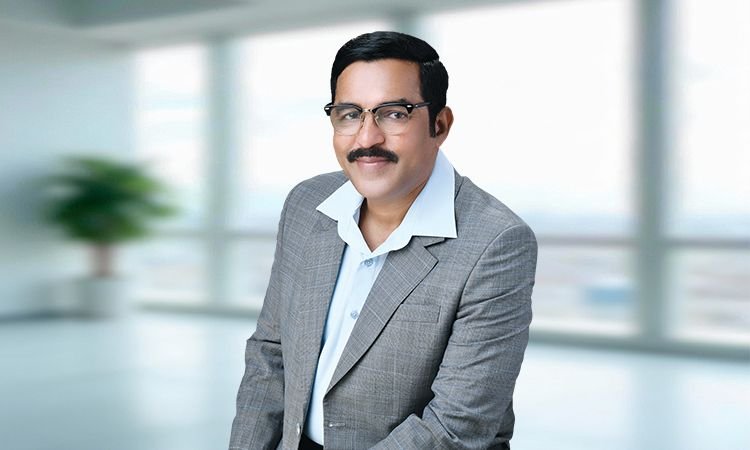
Managing DirectorSurface Modification Technologies Pvt.Ltd (SMT)
Since its inception in 2004, Surface Modification Technologies Pvt. Ltd. (SMT) has been at the forefront of India’s surface engineering revolution, delivering advanced PVD coating solutions that power the performance of cutting tools across industries.From the automotive and aerospace sectors to defense, medical, and precision engineering, SMT has consistently raised the bar with nano-structured, multilayer, and HiPIMS-based coatings tailored to the toughest machining challenges.
With a robust R&D foundation, state-of-the-art coating centres in Mumbai, Pune, and Bangalore, and a new facility in Germany, SMT is blending indigenous innovation with global collaboration to deliver high-performance, sustainable, and cost-effective coating solutions.
Today, as manufacturing evolves toward high-speed machining and complex materials, SMT stands as a trusted partner enabling toolmakers and industries to machine smarter, faster, and cleaner — symbolizing India’s growing leadership in advanced surface technologies, discovers Cutting Tools World in an exclusive interview with Dr. Umesh Mhatre, Managing Director, SMT. Excerpts:
Q1 SMT has been delivering PVD coating solutions since 2004. How has the demand for advanced surface enhancement evolved in the cutting tools industry over the years?
Since its inception in 2004, SMT has witnessed a remarkable transformation in the demand for PVD coatings for cutting tools. In the early 2000s, the automotive sector was the main driver seeking coating to enhance tool life and machining efficiency for lightweight components and stringent emission norms (BS6/BS7).With the shift toward EVs, tool requirements became even more specialized, demanding coatings for advanced materials like titanium alloys, composites, and hardened steels.
Today, PVD coatings are no longer limited to automotive; aerospace, defense, medical, and space applications are creating strong new demand. The industry has moved from standard TiN or TiAlN to advanced multilayer and nanocomposite coatings, as well as DLC (Diamond-Like Carbon) & HiPIMS-based solutions, each tailored to specific performance needs.
Overall, the PVD coating market is growing steadily worldwide, driven by innovation, sustainability, and the need for higher performance. For SMT, this evolution has been both an opportunity and a responsibility to continuously expand our coating portfolio and deliver solutions that meet the future of manufacturing.
Q2 Functional coatings are a core offering of SMT. Could you explain how your nano-structured, multilayer, and multi-component coatings improve the performance of cutting tools in severe operating conditions?
At SMT, functional coating forms the foundation of our offerings, particularly for cutting tools that operate under severe and demanding conditions. Our nano-structured coatings are designed at the microscopic level to refine grain size, which directly enhances hardness, wear resistance, and uniform performance across the tool surface.
This ensures that tools maintain sharpness and dimensional accuracy even when machining abrasive or hard-to-cut materials. Multilayer coatings bring another advantage: by stacking alternating thin layers, they act as effective crack barriers. When a crack begins to propagate during cutting, the layered structure prevents it from traveling through the coating, which significantly increases tool toughness and reliability in interrupted cutting or heavy-duty cycles.
Meanwhile, multi-component coatings such as AlTiN, AlCrN, and DLC hybrids deliver superior thermal stability, oxidation resistance, and low friction properties. For instance, DLC-based coatings reduce cutting forces and minimize heat generation, which is critical when machining non-ferrous metals, composites, or precision medical components. AlCrN, on the other hand, withstands extremely high cutting temperatures, making it suitable for aerospace alloys and dry machining applications.
In practical terms, these advanced coating architectures enable tools to cut faster, last longer, and perform consistently in industries where downtime or tool failure can have high costs. Whether it is high-speed machining in automotive, complex alloys in aerospace, or biocompatible requirements in medical applications, SMT’s coatings provide the performance and reliability that modern manufacturing demands.
Q3 What are the most common challenges your clients face in cutting tool applications, & how has SMT’s R&D team addressed them?
One of the most common challenges our clients, particularly MSMEs in the cutting tool sector face is keeping pace with the continuous technological upgradation in manufacturing. Whether they are toolmakers supplying to large industries or end-users machining critical components, they increasingly deal with lightweight alloys, composites, and tough-to-machine materials that demand higher-performance coatings. Achieving extended tool life and consistent quality in such conditions requires advanced solutions and significant technical groundwork.
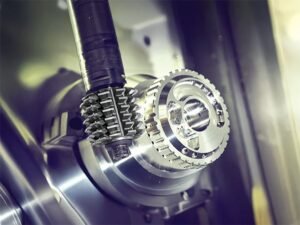
In India, the challenge is compounded by the limited availability of local R&D infrastructure to support MSMEs in adopting global innovations. Much of the cutting-edge coating technology has traditionally originated from the Western world or China, leaving smaller enterprises here struggling to bridge the gap.
SMT has consistently focused on addressing this need by building a strong indigenous R&D capability. Our team of scientists and engineers works on developing advanced PVD solutions nano-structured, multilayer, DLC, and HiPIMS-based coatings designed specifically for the machining challenges faced by Indian manufacturers. Importantly, we do not just supply coatings; we provide knowledge support, helping MSMEs understand application-specific requirements and adapt to evolving global standards.
By combining global expertise with indigenous innovation, SMT enables its clients to overcome the challenges of machining modern materials, reduce dependence on imported know-how, and achieve higher productivity and competitiveness in their markets.
Q4 With coating centres in Mumbai and Bangalore, how does SMT ensure consistent quality and timely service across regions?
SMT operates three state-of-the-art coating centres in Mumbai, Pune, and Bangalore, each equipped with advanced PVD systems and manned by highly skilled professionals. To ensure consistent quality across regions, we follow standardized operating procedures, common quality benchmarks, and regular cross-audits across all centres. This ensures that no matter where the coating is done, customers receive the same performance and reliability.
Our long-standing experience is further supported by in-house R&D and digital process controls, which allow coating recipes and deposition parameters to be replicated seamlessly across centres. This not only maintains quality uniformity but also enables quick troubleshooting and continuous improvement.
In terms of service, proximity plays a key role. By strategically positioning our centres in India’s major manufacturing hubs, we are able to provide shorter turnaround times, just-in-time deliveries, and technical support on the ground. This is particularly valuable for MSMEs, who often need fast response and localized assistance to keep their production running smoothly.
With this long PVD service experience and proven track record in India, SMT is now stepping into Europe with its new coating centre in Germany, extending the same standards of quality, innovation, and customer focus to global markets.
Q5 Could you share an example where SMT’s customized coating solution significantly extended tool life or improved productivity for a customer?
As a service provider and custodian of our customers’ tools and components, SMT maintains strict confidentiality regarding the specifics of individual projects. However, there are numerous instances where our customized coating solutions have significantly enhanced tool life, improved machining efficiency, and boosted productivity, reinforcing our clients’ confidence in our technological capabilities.
For example, in the pharmaceutical industry, our coatings have helped extend the life of precision dies and punches used in high-volume tablet production. In the horological (watchmaking) sector, SMT’s advanced PVD and DLC solutions have enabled delicate, high-precision components to withstand repetitive machining while maintaining surface integrity. In the automobile sector, our coatings are starting to make a measurable impact, helping tools achieve higher cutting speeds, longer life, and consistent performance even when machining advanced alloys and composites.
These examples, while maintaining client confidentiality, demonstrate SMT’s ability to tailor coating solutions to industry-specific needs, combining material science expertise, process know-how, and application support to deliver tangible improvements in tool performance and productivity. Q6 How does SMT balance performance enhancement with environmental and human safety in its coating processes?
At SMT, we believe that performance and sustainability must go hand in hand. Our PVD coating processes are designed to deliver high-performance solutions—enhancing hardness, wear resistance, and tool life—while minimizing environmental impact and ensuring human safety.
Unlike traditional coating methods such as electroplating, PVD is a clean, dry process that generates minimal waste and avoids the use of harmful chemicals. To further strengthen our commitment, SMT has implemented a robust Integrated Management System (IMS), encompassing quality, environment, and occupational health and safety standards. All our coating centres comply with pollution control norms and are equipped with advanced systems to manage emissions, effluents, and resource consumption, ensuring that our operations are safe for both employees and the environment.
We also prioritize energy-efficient operations and process optimization. By carefully controlling deposition parameters and leveraging advanced technologies such as HiPIMS, we achieve high-performance coatings with minimal energy and material usage.
Through this combination of advanced coating technology, IMS implementation, pollution control, and workplace safety practices, SMT provides solutions that meet modern manufacturing demands while adhering to the highest standards of environmental responsibility and human safety.
Q7 Collaborations seem to be part of your growth strategy. How have your partnerships with global players like PerformCoat Europe AG benefited your cutting tool customers?
In the field of sophisticated, high-end coating technologies, collaborations are an important part of accelerating innovation and reducing development time and cost. At SMT, we maintain strategic associations with global technology partners in Europe and the US, primarily to exchange knowledge, stay updated on emerging trends, and explore new technological developments.
These partnerships allow us to benchmark global best practices and quickly adapt advanced concepts to local applications, benefiting our cutting tool customers by providing access to innovative solutions more efficiently. However, our main focus remains on developing proprietary technology in-house. By combining insights from international collaborations with our own R&D expertise, SMT ensures that the solutions delivered to clients are tailored, reliable, and aligned with specific industry needs, rather than simply adopted from elsewhere.
In essence, these collaborations strengthen SMT’s technological foundation while allowing our clients—especially MSMEs—to leverage cutting-edge coating innovations without dependency on foreign systems, shortening development cycles and improving tool performance.
Q8 The cutting tool market is becoming increasingly competitive. How does SMT differentiate itself in terms of technology, turnaround time, and customer service?
The cutting tool market is indeed becoming increasingly competitive, and as a coating service provider, SMT’s role is to support our customers, tool manufacturers and end-users without adding unnecessary costs. While other players often drive their coating services with imported technologies, resulting in higher production costs, SMT focuses on homegrown R&D and process development to deliver high-performance coatings that are cost-effective and tailored to our customers’ specific needs.
Our large production capacities, optimized processes, and low rejection rates allow us to maintain consistent turnaround times, ensuring that our customers’ production schedules are not affected. At the same time, our approach to customer service, dedicated support, timely interactions, and customized solutions helps our clients leverage advanced coatings without the burden of excessive cost or complexity.
By combining innovative yet economical coating technology, reliable service, and operational efficiency, SMT differentiates itself as a partner that enables its customers to compete effectively in a challenging market.
Q9 How do you see emerging manufacturing trends—such as high-speed machining, hard-to-machine materials, and micro-tooling—shaping future coating requirements?
The rise of high-speed machining, hard-to-machine materials, and micro-tooling is reshaping not only manufacturing but also the requirements for the coating industry. As components become lighter, stronger, and more complex, cutting tools are subjected to higher thermal loads, abrasive wear, and tighter precision demands. This directly compels the coating industry to evolve rapidly, delivering solutions that go beyond conventional hard coatings..
For coatings, the effect is clear: they must now combine superior hardness, thermal stability, low friction, and precision uniformity while being adaptable to a wide range of materials—from tough alloys and composites to miniature tools used in electronics and medical applications. This has led to a greater emphasis on nano-structured architectures, multilayer and multi-component coatings, DLC and hybrid films, all designed to handle severe operating conditions while extending tool life and improving productivity.
In essence, the pace of technological change in machining dictates the direction of the coating industry. At SMT, we see our role as staying aligned with these shifts, continuously upgrading our technology through R&D to deliver coatings that not only meet today’s challenges but also set the foundation for future manufacturing needs.
Q10 What are SMT’s plans for innovation and capacity expansion in the coming years, specifically for the cutting tools segment?
Looking at the future requirements of the cutting tool segment, SMT is gearing up with modern infrastructure and customer-centric locations to deliver greater cost-effectiveness and faster turnaround times. As industry continues to demand coating that can keep pace with new materials, high-speed machining, and precision tooling, we are aligning our expansion to ensure we remain close to our customers and their evolving needs.
A key pillar of our strategy is the strengthening of our R&D capabilities, with a strong focus on developing homegrown technologies that allow us to offer advanced coating at competitive costs. This approach not only reduces dependency on imported technologies but also ensures that we can design solutions tailored to the specific requirements of MSMEs and large manufacturers alike.
Our new coating center in Germany will play a vital role in this journey. It will serve as a hub for promoting local technology, fostering collaborations, and ensuring faster exchange of technological developments across regions. Alongside this, SMT has a roadmap for global expansion, ensuring that our customers worldwide benefit from both our cost advantages and our technological strengths.
In short, SMT’s plans for innovation and capacity expansion are guided by a dual focus: scaling infrastructure to serve customers better and advancing R&D to create the next generation of coating solutions for the cutting tool industry.
Q11 How do you envision the future of SMT?
Being in the high-end, state-of-the-art technology market, SMT sees the future as bright and prosperous. What was once confined to R&D laboratories in academic institutions is now flourishing on the industrial floor, proving its true potential in real-world applications. Experiencing this transformation and contributing to it is a journey that SMT truly enjoys and one that we are committed to continuing with all our strength.
We envision SMT as more than a coating service provider: our goal is to be a global technology partner that develops homegrown, sustainable, and cost-effective coating solutions while expanding our footprint across international markets. With our new presence in Germany and a roadmap for further global expansion, we aim to ensure faster knowledge exchange, localized services, and advanced coating solutions for diverse industries.
At the same time, we are proud to represent the presence of an Indian player in the global PVD market, which has long been dominated by Europe, the USA, and China. Our aspiration is to make a lasting mark by combining Indian ingenuity with global technological leadership, building a future where SMT stands recognized for innovation, reliability, and impact worldwide.
In essence, the future of SMT is about expanding globally, innovating continuously, and proudly carrying forward the Indian presence in advanced surface engineering.