Why advanced PVD coatings are becoming critical for modern manufacturing
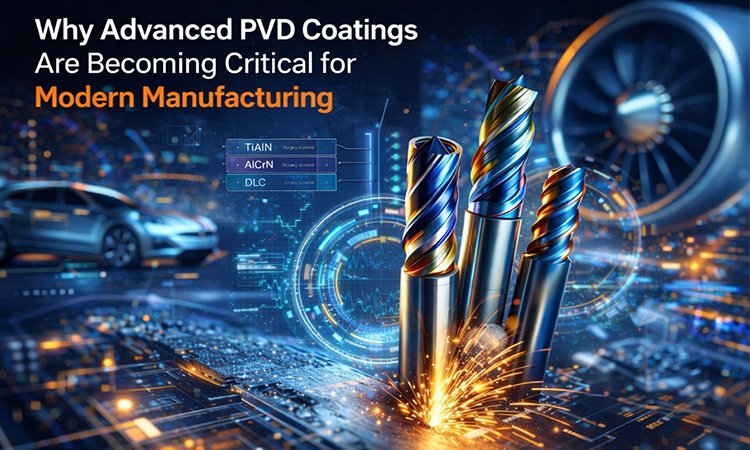
How automotive, aerospace, MSMEs, and global collaborations are reshaping the future of surface engineering As global manufacturing enters a new era defined by precision, speed, and material complexity, the performance expectations from cutting tools have reached unprecedented levels. Today’s tools must withstand higher temperatures, abrasive wear, micro-level tolerances, and demanding production cycles across industries ranging from automotive and aerospace to medical and defense.
In this environment, advanced PVD (Physical Vapor Deposition) coatings, especially nano-structured, multilayer, and HiPIMS-based solutions, have shifted from being an optional add-on to a strategic necessity.
The Manufacturing Shift Driving Demand for Advanced Coatings
1. Automotive Industry: From ICE to EVs — New Materials, New Challenges
The automotive sector, historically a major consumer of coated cutting tools, is undergoing a transformative shift.
The move from ICE to electric vehicles has introduced:
• Lightweight alloys
• High-strength steels
• Composite materials
• Heat-sensitive components
These materials are tougher to machine, generate more heat, and wear out uncoated tools rapidly.
This has created rapid adoption of:
• Nano-structured coatings for wear resistance
• Multilayer coatings for crack resistance
• DLC coatings for low-friction machining of non-ferrous metals
The cover story clearly reflects how industries now demand specialized coatings tailored to very specific applications, a trend that began in automotive and is now accelerating across sectors
2. Aerospace & Military Precision Components: Zero-Margin-for-Error Machining
Aerospace and defense manufacturing uses some of the most difficult materials to cut:
• Titanium alloys
• Nickle-based superalloys
• Composite structural components
These materials require machining at:
• Higher temperatures
• Higher cutting speeds
• Ultra-tight tolerances
According to aerospace trends reported globally, the rise in engine efficiency, lightweight structures, and heat-resistant materials has increased reliance on high-performance coatings.
Here are the latest insights:
• AlCrN coatings excel at extreme temperatures
• DLC hybrids minimize friction
• HiPIMS coatings provide very dense, hard, and uniform layers
These technologies now define aerospace-grade tooling requirements, enabling longer tool life and stable machining performance even under severe load conditions
3. The Rise of Hard-to-Machine Materials Across Industries
High-speed machining, precision engineering, and lightweight designs have led global industries to rely more on:
• Hardened steels
• Composites
• High-strength alloys
• Non-ferrous metals
• Miniaturized components
This shift has fundamentally changed coating expectations.
Why traditional coatings aren’t enough anymore
The industry has moved from basic TiN/TiAlN coatings to nanocomposites, multilayers, and HiPIMS-based PVD solutions because manufacturers now need:
• Higher oxidation resistance
• Extremely low friction
• Better grain refinement
• Resistance to micro-cracks
• Stability under higher heat
4. MSME Adoption Barriers: The Modernization Gap
A significant portion of India’s cutting tool ecosystem consists of MSMEs, many of whom face three critical challenges:
Limited access to high-end R&D
Most advanced coating technologies historically originated in Europe, the US, or China.
MSMEs often lack exposure to:
• The latest PVD innovations
• Application-specific coatings
• Global machining best practices
The cover story highlights that MSMEs struggle due to the limited availability of local R&D infrastructure, slowing down their ability to adopt global machining advancements
Lack of application knowledge
Choosing the right coating requires understanding:
• Material-tool interactions
• Cutting conditions
• Wear patterns
• Thermal behavior
Knowledge-driven coating providers support MSMEs by helping them select application-specific coatings, improving tool life and consistency.
Need for cost-effective performance
MSMEs often seek:
• Longer tool life
• Stable performance
• Faster turnaround
• Competitive pricing
The industry demand is therefore shifting toward high-performance yet economical, homegrown technologies, as highlighted in the cover story’s emphasis on indigenous innovation.
5. Global Collaborations: Accelerating Innovation
The surface engineering world is evolving through cross-border knowledge exchange.
The cover story explicitly highlights how collaborations between Indian and global technology partners—particularly in Europe—help manufacturers:
• Access cutting-edge developments faster
• Benchmark global quality standards
• Transfer knowledge efficiently
• Shorten development cycles
• Improve productivity without increasing costs
These collaborations allow local industries, especially MSMEs, to overcome dependency on imported technologies while still benefiting from the latest global advancements
6. Sustainability: The New Performance Metric
Modern PVD coatings contribute to sustainability by:
• Reducing tool waste
• Eliminating chemical-intensive processes (vs. electroplating)
• Lowering energy usage during machining
• Supporting dry machining applications
HiPIMS and advanced PVD methods offer higher performance with lower environmental burden, a trend the cover story emphasizes through Integrated Management Systems and pollution control practices.
7. What the Future Holds for PVD Coatings
Precision, Miniaturization & Next-gen Tooling
The next decade of manufacturing will require coatings that support:
• Micro-tooling
• Electronics miniaturization
• Aerospace-grade alloys
• High-speed machining
• Complex geometry cutting
The future lies in:
• Ultra-dense nano architectures
• Hybrid multilayers
• AI-assisted deposition systems
• Coatings designed for Industry 4.0 manufacturing environments
As industries continue to evolve, the role of high-performance surface engineering will expand dramatically.
Dive deeper into the technology, trends, and expert insights shaping the future of surface engineering, read the full cover story in our upcoming CTW December Issue.